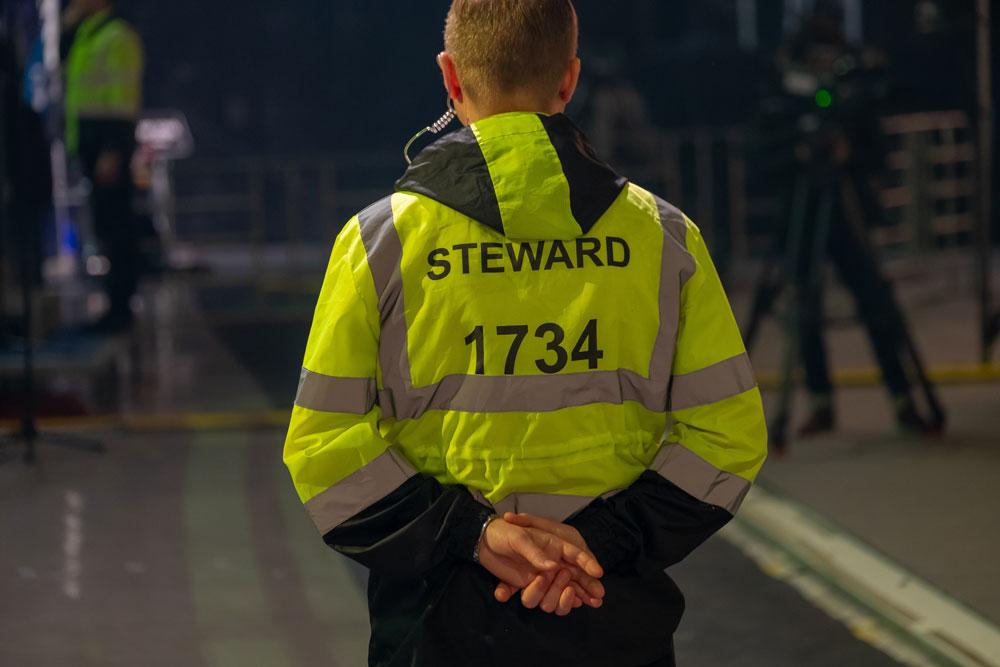

The Home Office has published new guidance to support the implementation of Martyn's Law.
The guidance sets out steps for businesses to ensure evacuation routes are in place, staff know how to swiftly implement a lockdown in their building, and staff know how to quickly communicate with their customers were an attack to occur.
For larger premises and events like concerts and sports stadiums, where 800 people or more will be present, further actions will need to be taken. This includes having CCTV, bag search policies or vehicle checks.
The act will come into effect after an implementation period of at least 24 months from Royal Assent, giving organisations time to understand their new obligations and prepare.
The Terrorism (Protection of Premises) Act 2025 also known as Martyn’s Law is named after Martyn Hett who was killed in the Manchester Arena attack.
Security Minister, Dan Jarvis, said: "Martyn’s Law will help to save lives by making sure venues are ready to act if the worst happens.
"Today’s guidance is a significant step toward turning the law into action, giving organisations clear, straightforward advice to protect the public.
"I pay tribute to Figen Murray, whose dedication was instrumental in bringing this landmark law into existence."
Figen Murray, mother of Martyn Hett said: "This represents another significant milestone for the Martyn’s Law campaign and will provide the clarity for venues and events within scope to begin to implement proportionate measures set out within Martyn’s Law.
"We must now ensure everyone is aware of what is required and to make public spaces more secure from the impact of a terrorist attack, so no family has to endure the lasting pain that mine and 21 others have gone through."
The government hopes that by providing practical advice and clear instructions, organisations will be empowered to take proportionate steps to protect lives and improve emergency preparedness.
The guidance highlights that those responsible for premises and events in scope can comply without needing to buy specialist or consultancy services.
It also provides advice and illustrative examples to help those with responsibilities under the legislation.
Jon Savell, Counter Terrorism Policing Senior National Coordinator for Protect and Prepare said: "This is legislation borne out of tragedy, and from the tenacity of people personally affected by horrific events, and we remain humbled by their drive to work with authorities to ensure what they went through won’t happen to others.
"Securing public spaces so people can enjoy events and social activities free from the fear of the enduring threat of terrorism is something Counter Terrorism Policing has long championed - the new guidance from government to help venues fulfil that legal duty is a welcomed step.
"We know that it’s not a one-size-fits all when it comes to safety; Martyn’s Law takes account of that, with different measures depending on the size and type of venue. We will continue to support the implementation of this legislation as it’s introduced."
As the regulator, the Security Industry Authority will support, advise and guide those responsible for premises and events in meeting the requirements of this legislation.
Michelle Russell, Chief Executive of the Security Industry (SIA) said: "Today is an important milestone. As the regulator of Martyn’s law, the SIA’s approach will be driven by public protection objectives. Our focus will be to ensure compliance with the requirements set out in the legislation and Home Office section 27 guidance published today.
"This guidance will enable us as the independent regulator to take decisions on whether premises and events in scope have taken the steps, they need to comply and play our part in bringing about improvements to protective security across the UK."
Meanwhile, the SIA has launched a public consultation on the section 12 guidance for Martyn's Law.
The guidance sets out how the SIA intends to carry out its role as regulator for the Terrorism (Protection of Premises) Act 2025.
The SIA’s draft section 12 guidance explains how the regulator plans to operate and use its powers, taking a supportive, proportionate and risk‑based approach.
The guidance sets out that the SIA’s regulatory approach will be driven by its public protection objectives. It explains how the SIA will provide guidance to help premises comply with the law; when the SIA may provide tailored regulatory advice in response to specific compliance concerns; and how the SIA’s powers to obtain and share information will work.
It also includes how the SIA will carry out inspections and assessments of compliance documents and how the SIA will address non‑compliance, including how it will make compliance decisions, when it may use enforcement powers and how financial penalties will be set.
The SIA intends to publish further practical information about its operational processes, including how and when responsible persons should notify the SIA that they are in scope of Martyn’s Law, which is one of the Act’s requirements, once its online notification system has been built.
The consultation will close at 11:59pm on Friday 12 June.
Laura Gibb, Executive Director for Martyn’s Law at the SIA, said: "This consultation is an important opportunity for all premises and events in scope of Martyn’s Law to engage with us directly and understand how we intend to regulate when Martyn’s Law comes into force in Spring 2027.
"We would like your views on the elements of the SIA’s guidance that set out our intended approach and how we propose to operate against the framework set out in the legislation. We would also welcome views on whether the guidance is understandable and easy to follow.
"Please tell us what you think. We need your input to make sure it is as clear as possible. We look forward to hearing from you."
Martyn's Law is expected to come into effect in Spring 2027.