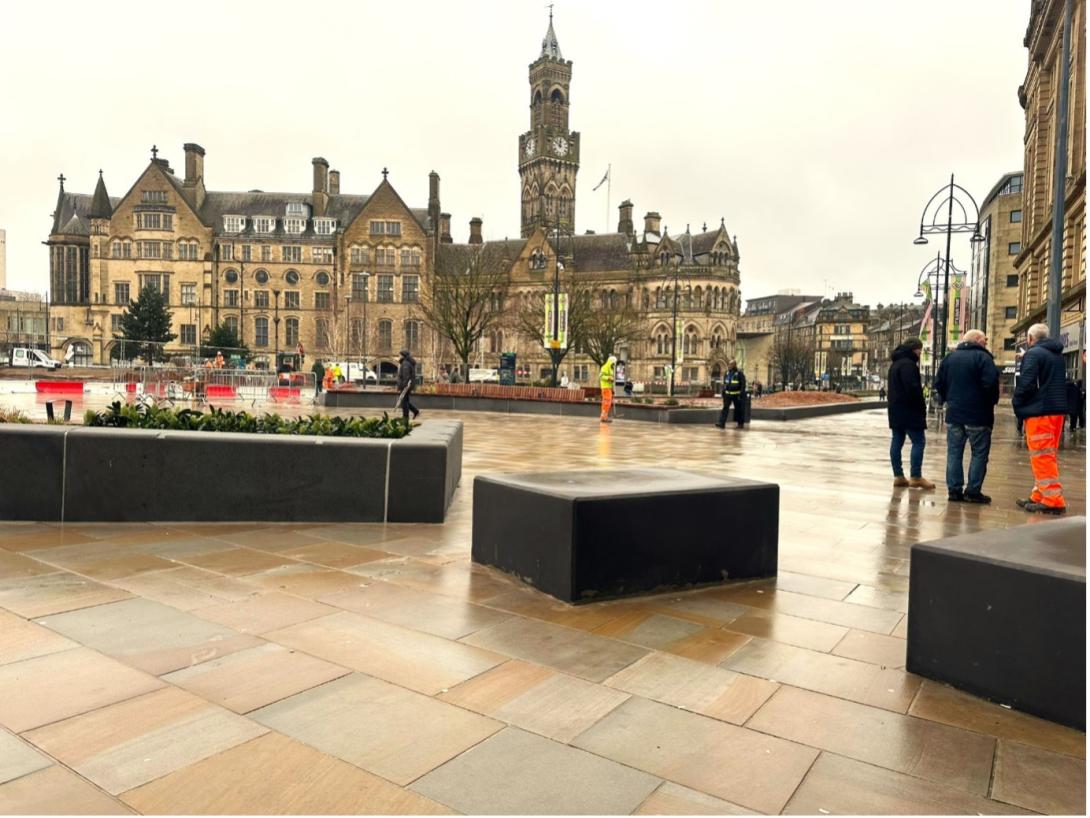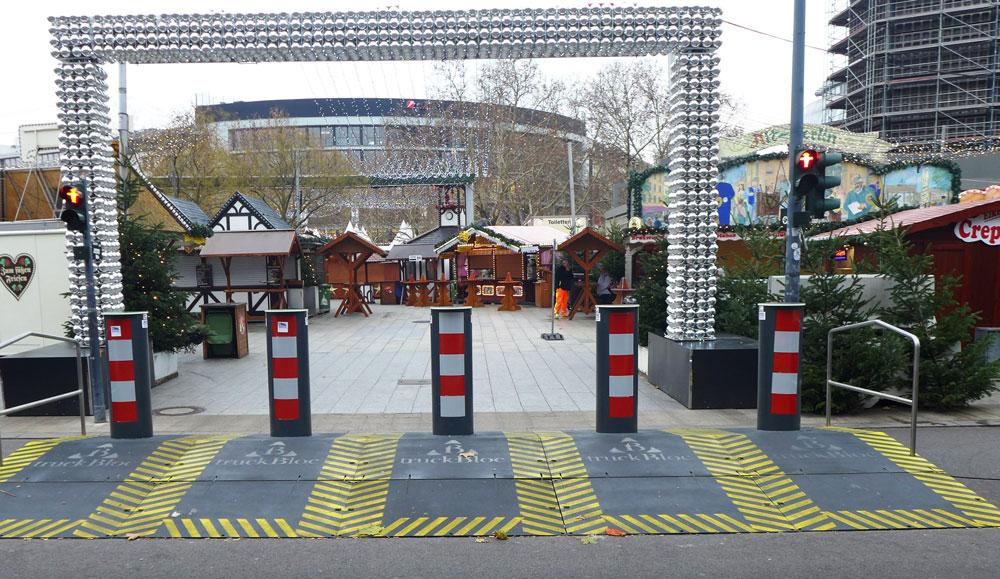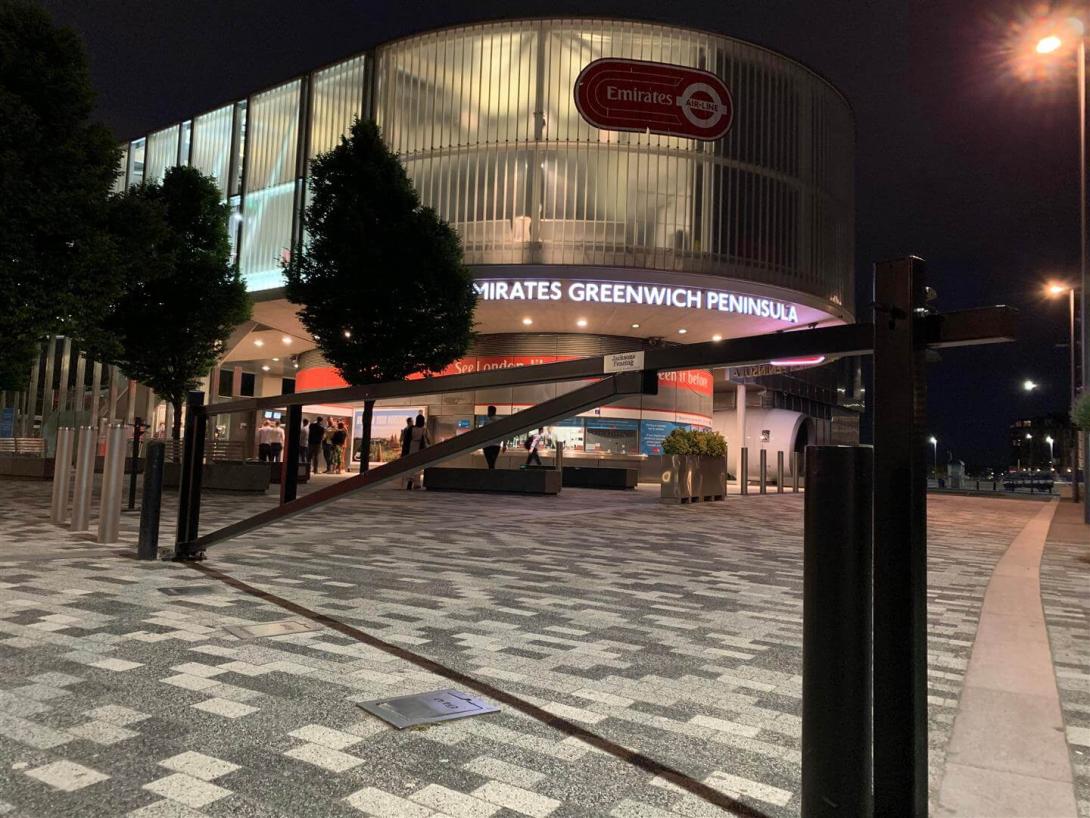

Severe vehicle borne attacks pose an increasing threat to our public security, while the growing use of unsuitable countermeasures often exacerbates the problem rather than alleviating it. This article from Christian Schneider outlines how a simple misunderstanding can have fatal consequences, which common misconception results in mere placebo security, and how the consistent application of proven standards can protect us far more effectively against hostile vehicle attacks.
The number of vehicle as weapon (VAW) incidents targeting publicly available locations (PAL), squares and critical infrastructure has been rising steadily for years — and forecasts suggest this trend will continue. Although more vehicle security barriers (VSB) are appearing in our cities and around major events, the question remains: what happens when hostile actors recognise the weaknesses of poorly conceived hostile vehicle mitigation schemes and exploit the minimal stopping capability of unsuitable barriers? And what if attackers increasingly receive guidance from hostile professionals, enabling them to simply overrun the many incorrectly deployed temporary barriers that are all too common around events?
This leads us directly to one of the primary causes of ineffective hostile vehicle mitigation (HVM) measures frequently observed at event sites: the unfortunate confusion — or conflation — of hostile vehicle mitigation with event safety management. This confusion often results in serious errors at every stage of qualification, planning and implementation. Such errors are not only costly, but also carry potentially grave consequences for public security. Effective hostile vehicle mitigation is not a matter of placing barriers at random close to an event site; it requires a technically sound, legally robust engineering design, delivered with appropriate, certified protective systems.
Recent vehicle attacks have made three essential points abundantly clear: vehicle borne attacks are now a firmly established tactic among politically, ideologically, or religiously motivated extremists; poorly planned or inadequately implemented protective measures can harm the public rather than protect it by creating a dangerously false sense of security; barriers must not only be certified, but also suitable for their specific operational environment.
The tragic attacks on the Christmas market in Magdeburg, Germany, on 20 December 2024 — resulting in six fatalities and more than 300 injured — and on the New Year’s celebrations in New Orleans, USA, with 14 deaths and 57 injured, have shown with brutal clarity that hostile vehicle mitigation measures must be designed exclusively by suitably qualified and experienced specialists. Such specialists understand that only crash tested, certified barriers suitable for the specific site may be used. Certification alone is never sufficient; an unsuitable or under specified barrier can itself become a lethal hazard during an attack. Unfortunately, numerous Christmas markets again demonstrated this in 2025. A notable example was the actual Magdeburg Christmas market, which initially failed to obtain official approval because the appointed planner obviously lacked sufficient HVM qualifications and relevant engineering accreditation, and had proposed non certified, unsuitable and severely under specified barriers. The consequences for public safety, the victims and their families, the city’s reputation, political stakeholders and local businesses were profound.
HVM v event safety
Hostile vehicle mitigation must therefore never be confused with event safety. It requires dedicated engineering expertise provided by qualified HVM specialists. HVM protects sites, not events. Events may take place on those protected sites — indeed they should — but the primary purpose of professional HVM planning is to secure the location itself, regardless of whether an event is in progress.
Clear separation of HVM engineering from event safety management not only demonstrates competence and professional responsibility, but also ensures that people remain protected in everyday environments — in pedestrian zones, city centres or around arenas — even when no event is taking place. A crucial lesson from recent years is the need to recognise distinct professional competencies, strictly separate HVM from event safety management, and never trivialise specialist expertise.
Hostile vehicle mitigation is not a new discipline; it has evolved continuously since the 1980s. Generations of engineers have refined techniques in accordance with JASPAR principles (Justificable, Archievable, Suitable, Practical, Affordable, Reasonable). There is no reason to reinvent established processes; on the contrary, there are compelling reasons to rely on the extensive expertise already available. Qualified specialists work in accordance with the latest HVM norm, ISO 22343 2, supported throughout by the proven project methodology of the RIBA Plan of Work. Effective HVM design also requires professionals trained not only in engineering and construction, but also in policing, threat mitigation and counter terrorism — and who maintain continuous professional development (CPD) in these fields.
To ensure this level of competence, the National Protective Security Authority (NPSA) supports Chartered Security Professionals (CSyP) and the Register of Security Engineers and Specialists (RSES), enabling recognised experts to serve as Specialist Security Advisors – Hostile Vehicle Mitigation (SSA HVM). Those tasked with protecting soft or hard targets can draw on the extensive experience of organisations such as NPSA and NaCTSO, adhere to relevant standards including ISO 22343 2, use the RIBA Plan of Work, and engage both independent Counter Terrorism Security Advisers (CTSA) and RSES accredited HVM specialists.
The real question, therefore, is no longer how we can better prevent future vehicle as a weapon attacks — but whether decision makers recognise the proven structures already available and are willing to adopt and rigorously apply them.